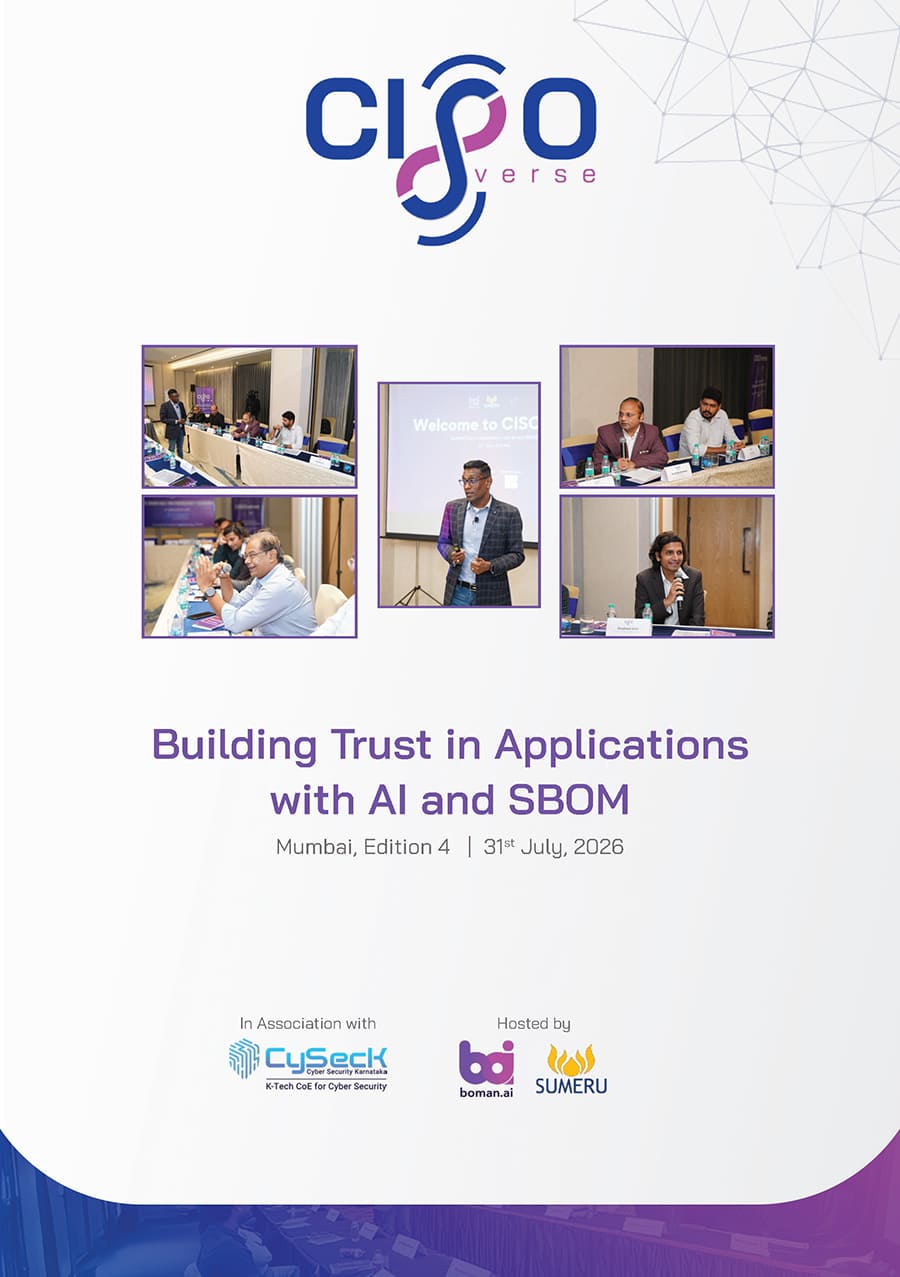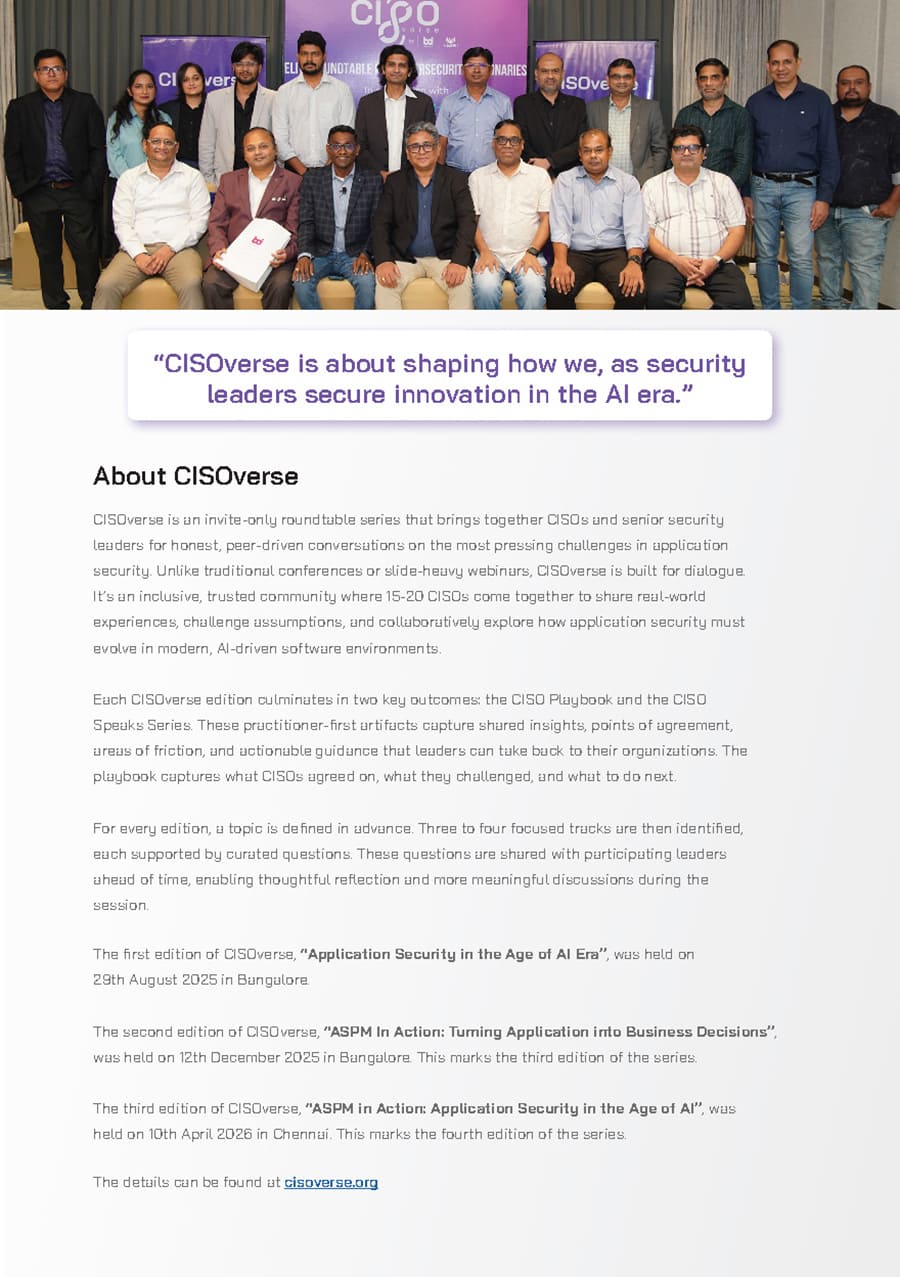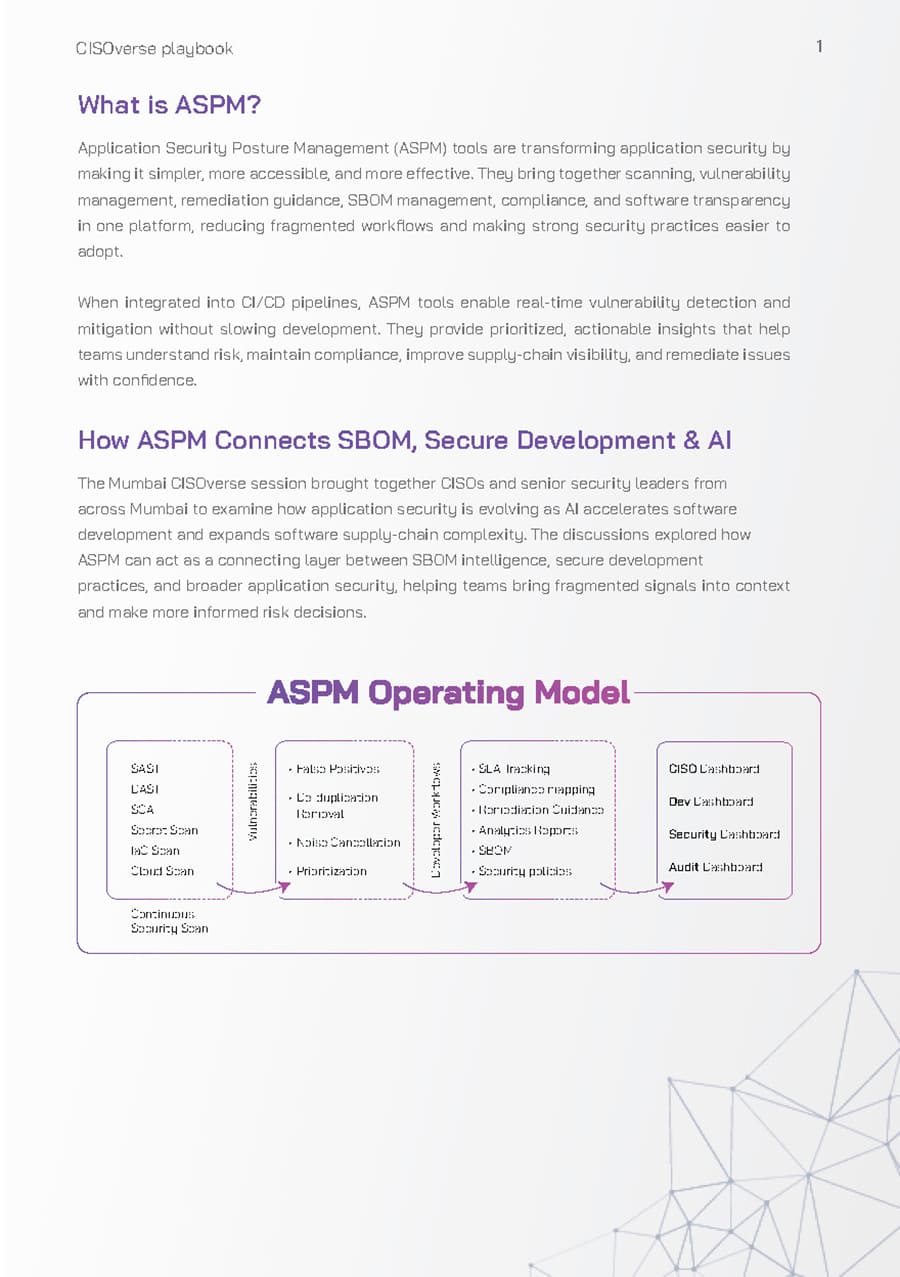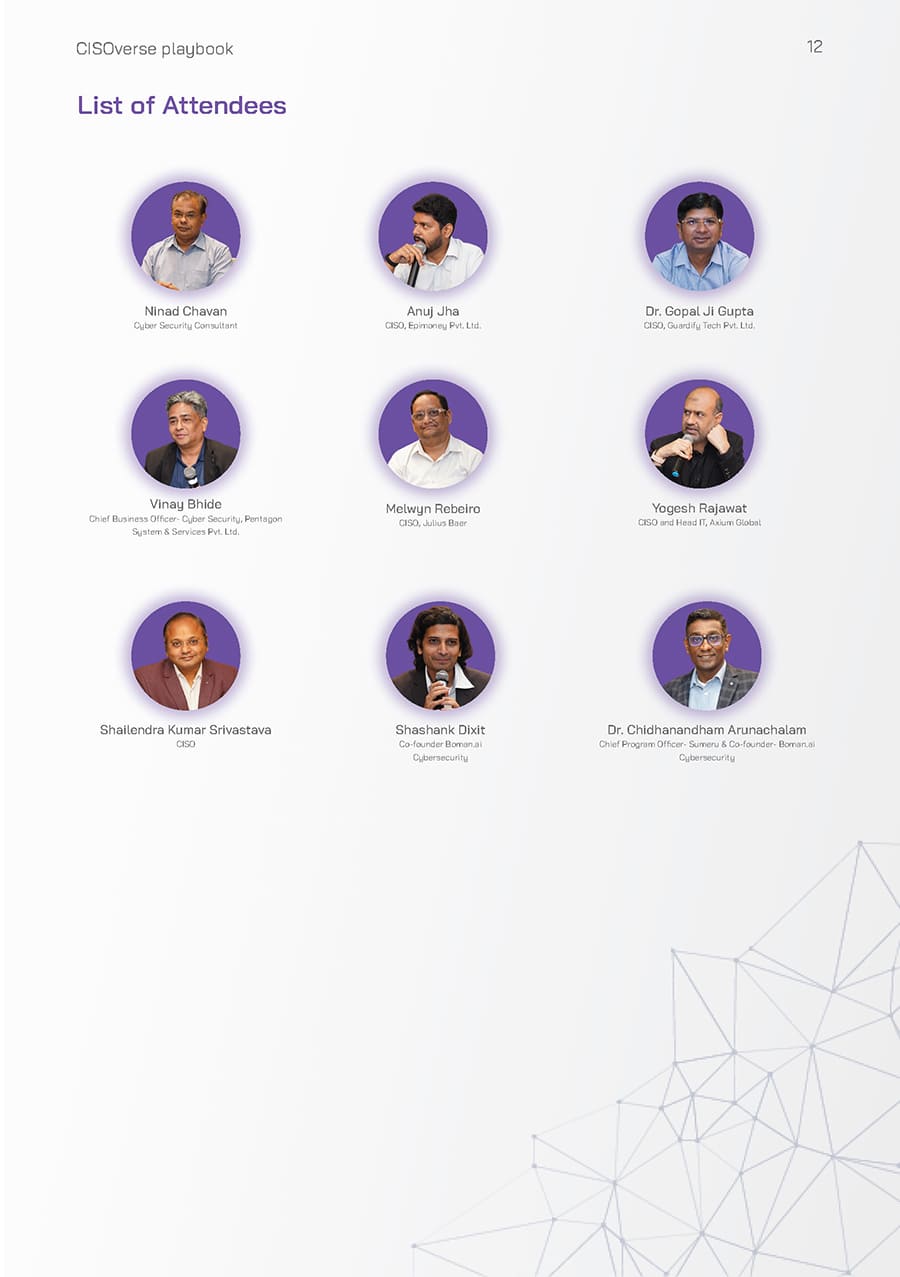
This session brought together CISOs from leading enterprises in Mumbai to discuss how AI and Software Bill of Materials (SBOM) are shaping the future of application security and software trust. Through peer-led discussions, leaders explored challenges around gaining visibility into software components, managing third-party and open-source risks, and securing applications across increasingly complex development environments. The session highlighted the importance of greater transparency, continuous risk assessment, and stronger security practices to build trust in applications in the age of AI.


Cyber Security Consultant
CISO, Epimoney Pvt. Ltd.
CISO, Guardify Tech Pvt. Ltd
Chief Business Officer- Cyber Security, Pentagon System & Services Pvt. Ltd.
CISO, Julius Baer
CISO and Head IT, Axium Global
CISO
Chief Program Officer- Sumeru & Co-founder - Boman.ai Cybersecurity
Co-founder - Boman.ai Cybersecurity
After the event, we asked CISOs a few questions - here’s what they had to say.
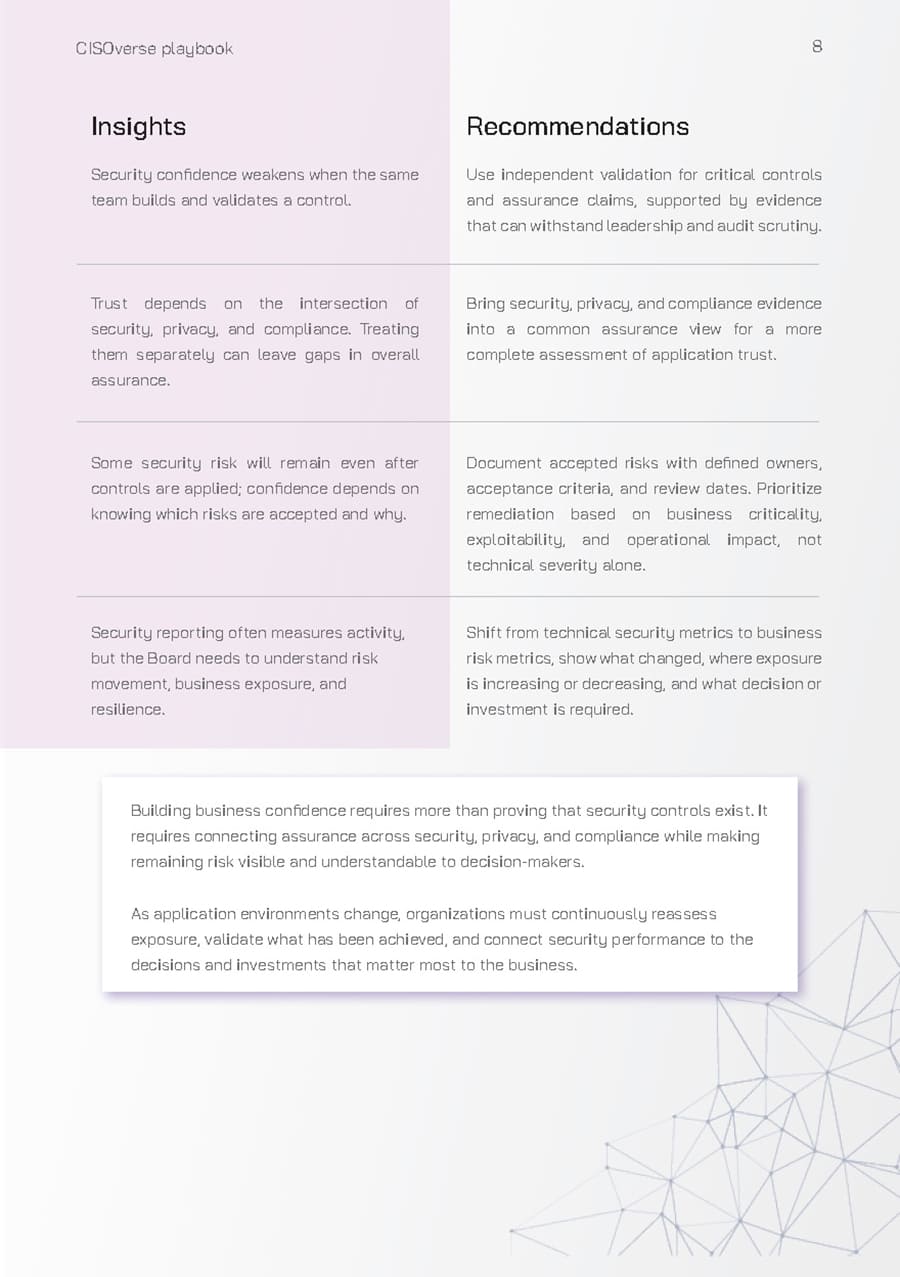
Shares his perspective on SBOM as a strategic asset rather than a compliance checkbox, highlighting its role in understanding application components, identifying vulnerabilities early, and strengthening software supply-chain security.
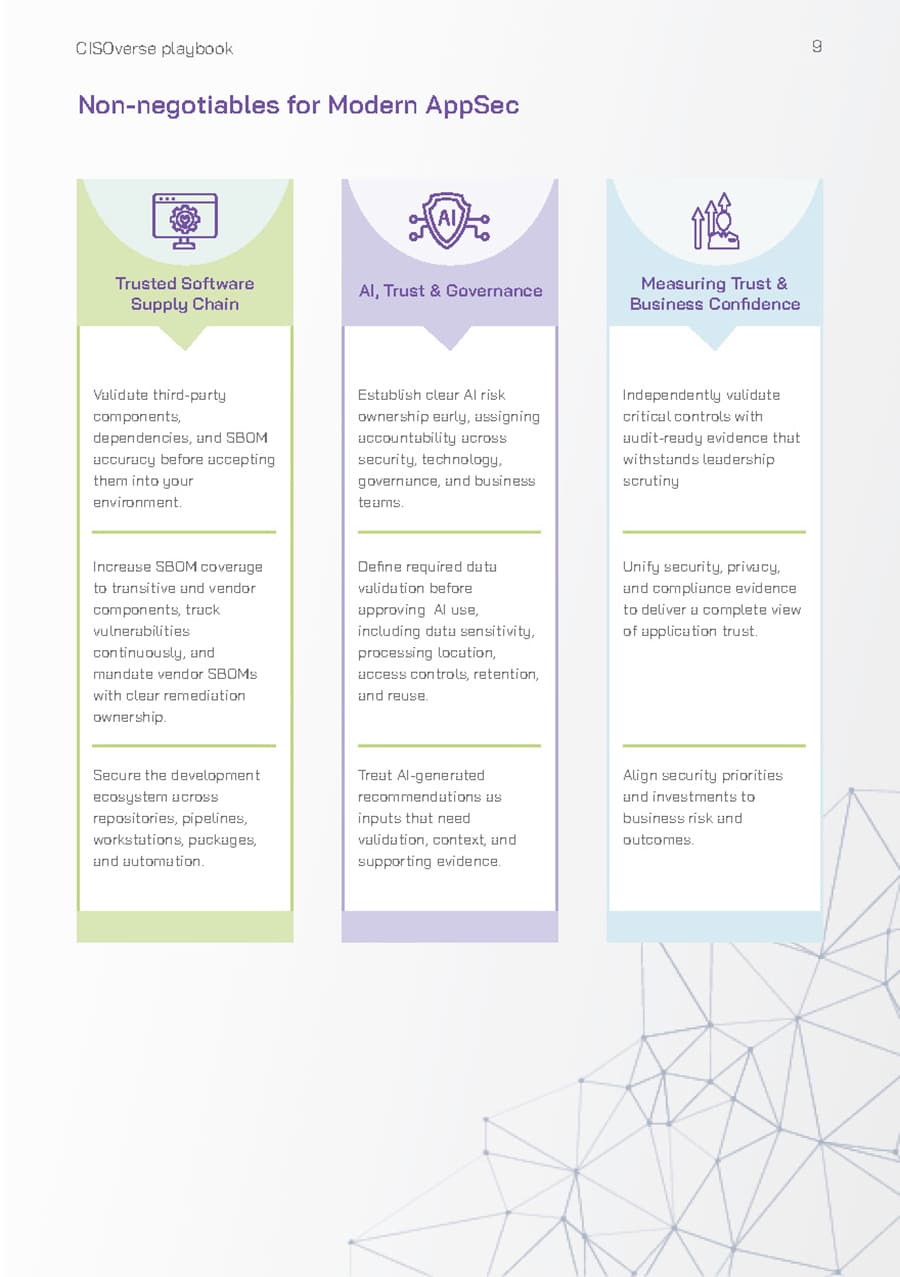
Emphasizes the importance of a maker checker approach to governance, where security practices are not only executed but independently validated, with clear accountability for the decisions and objectives behind them.
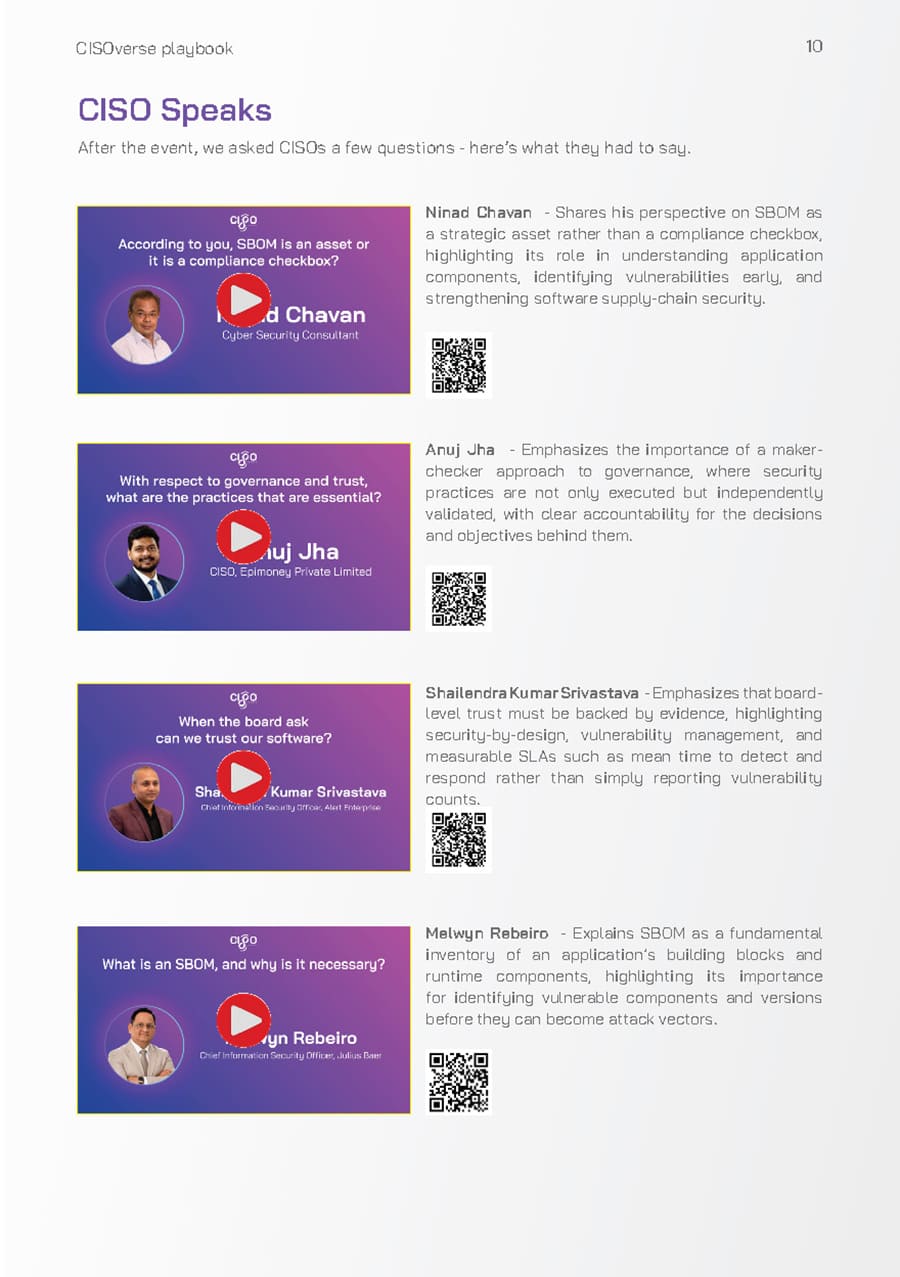
Emphasizes that board level trust must be backed by evidence, highlighting security-by-design, vulnerability management, and measurable SLAs such as mean time to detect and respond rather than simply reporting vulnerability counts.
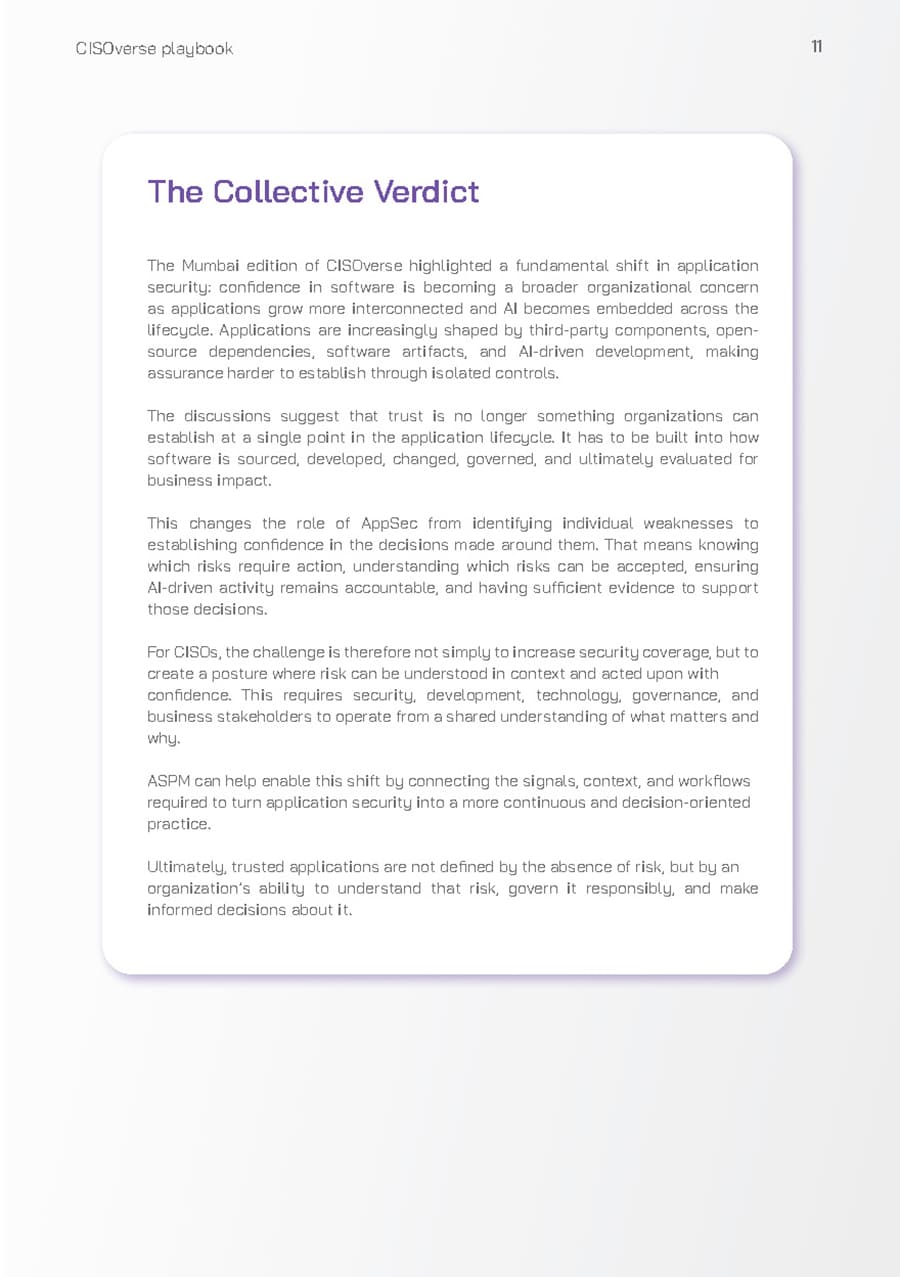
Explains SBOM as a fundamental inventory of an application’s building blocks and runtime components, highlighting its importance for identifying vulnerable components and versions before they can become attack vectors.
This playbook captures key insights and practical takeaways from the CISOverse Mumbai roundtable, shaped by real-world challenges shared by CISOs working to build trust across increasingly complex application and software environments.
The playbook explores how AI and Software Bill of Materials (SBOM) can strengthen application security by improving visibility into software components, dependencies, and emerging risks. It brings together perspectives on managing open-source and third-party exposure, gaining greater transparency across the software supply chain, and making security decisions with better context.
Covering themes such as AI-driven application security, SBOM adoption, software supply chain risk, and building trust across the application lifecycle, the playbook offers practical guidance to improve visibility, strengthen risk management, and embed security into modern development environments.